Harvested, never felled.
Cork is a premium material that gives back to the earth — renewable, vegan, biodegradable and endlessly characterful. Here is how it reaches your table.
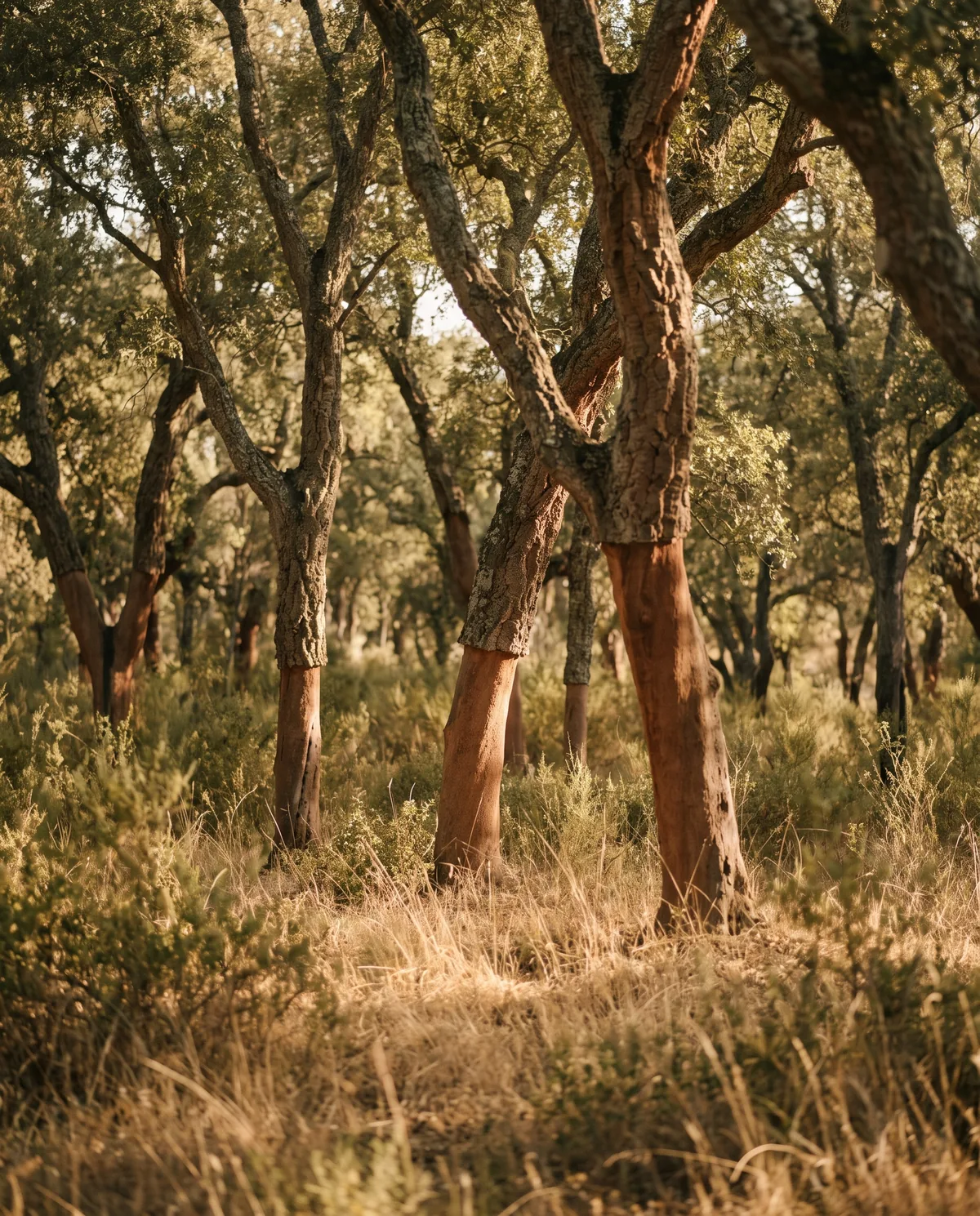
The forest
It begins in the cork oak forests of Portugal and Spain — the montado, one of the most biodiverse ecosystems on earth.
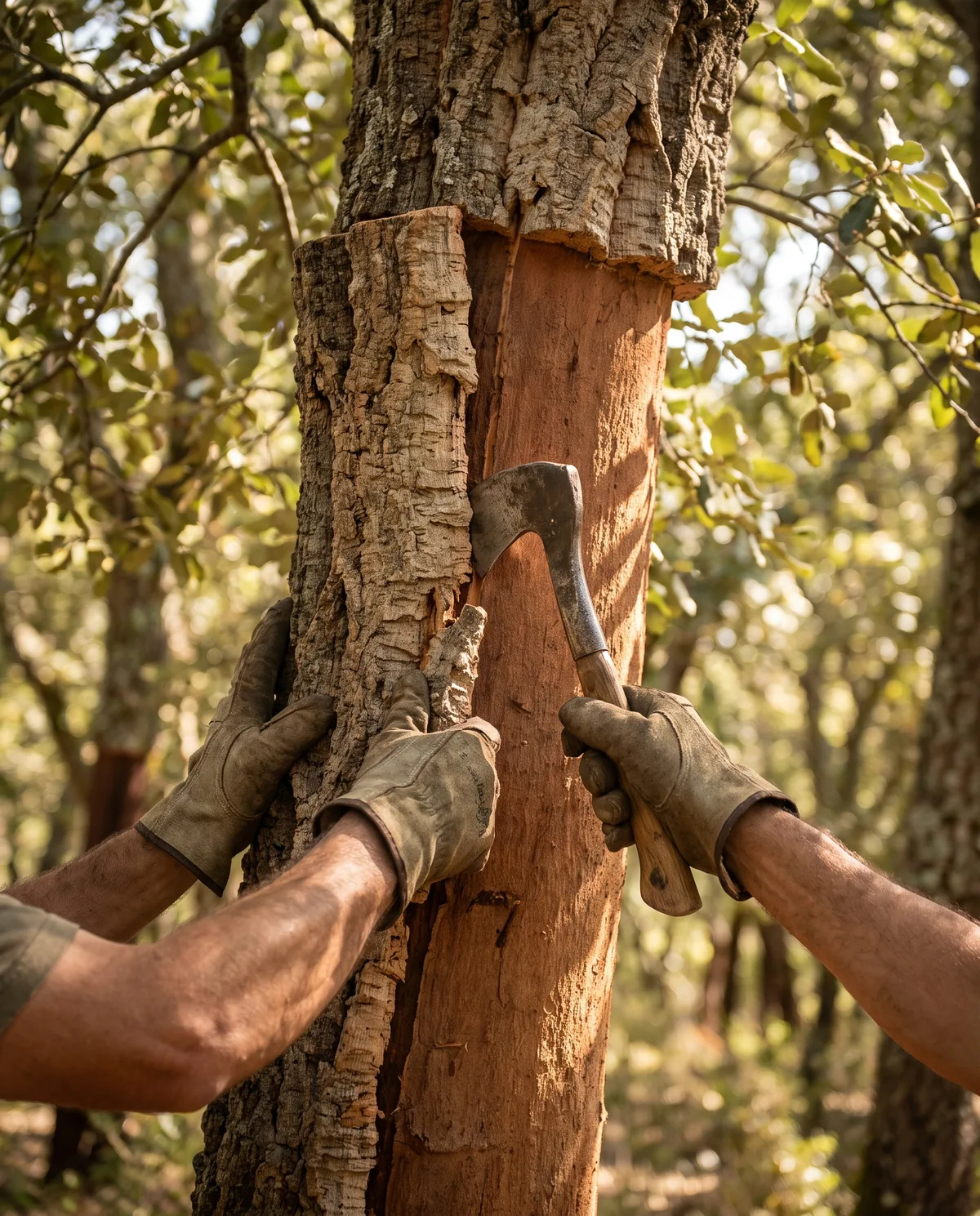
The harvest
Every nine years the bark is stripped by hand. No tree is ever cut. The oak lives on — for up to two centuries.
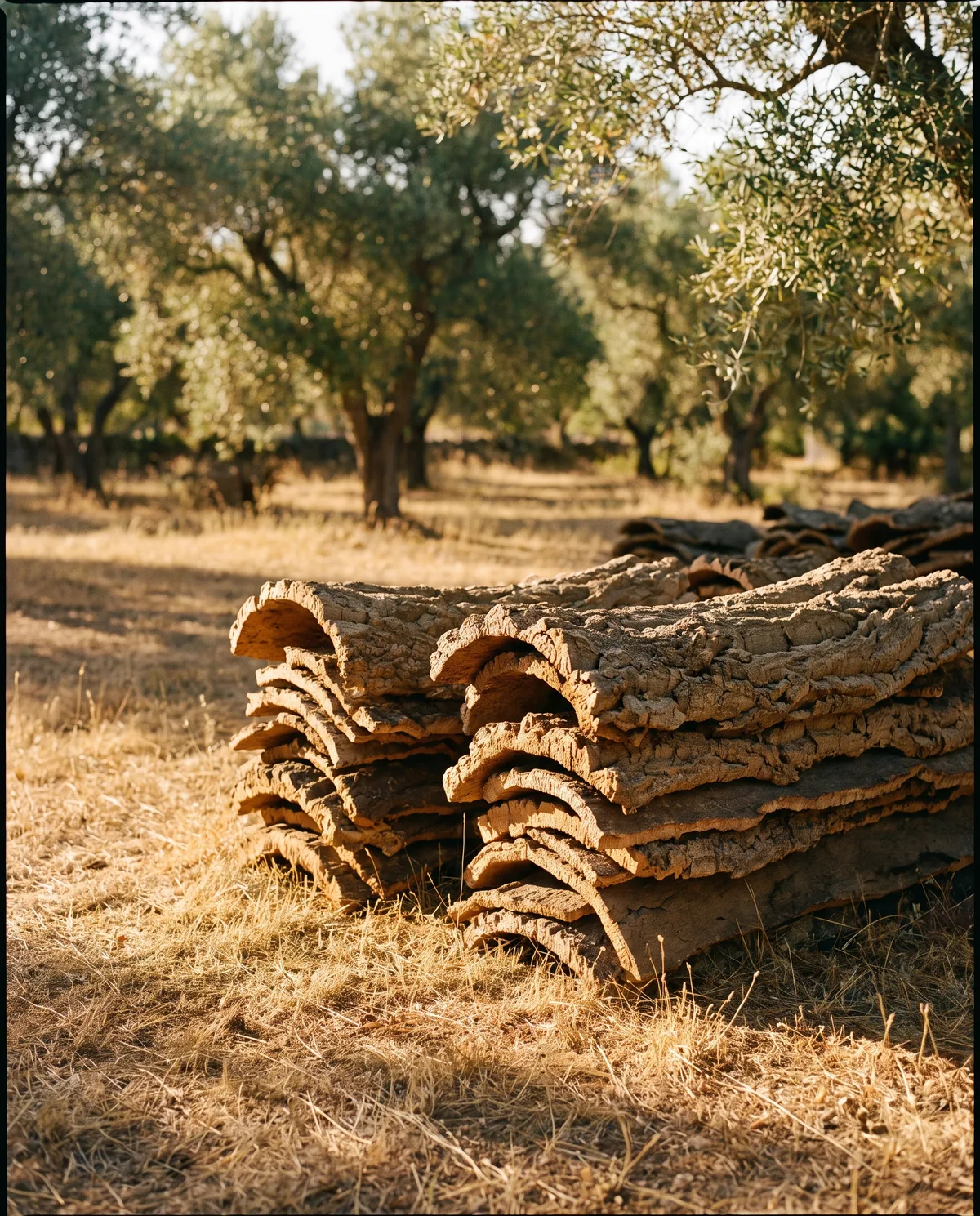
The bark
Harvested planks are cured in the sun, then sorted. A single harvest gives back more carbon-absorbing bark each cycle.
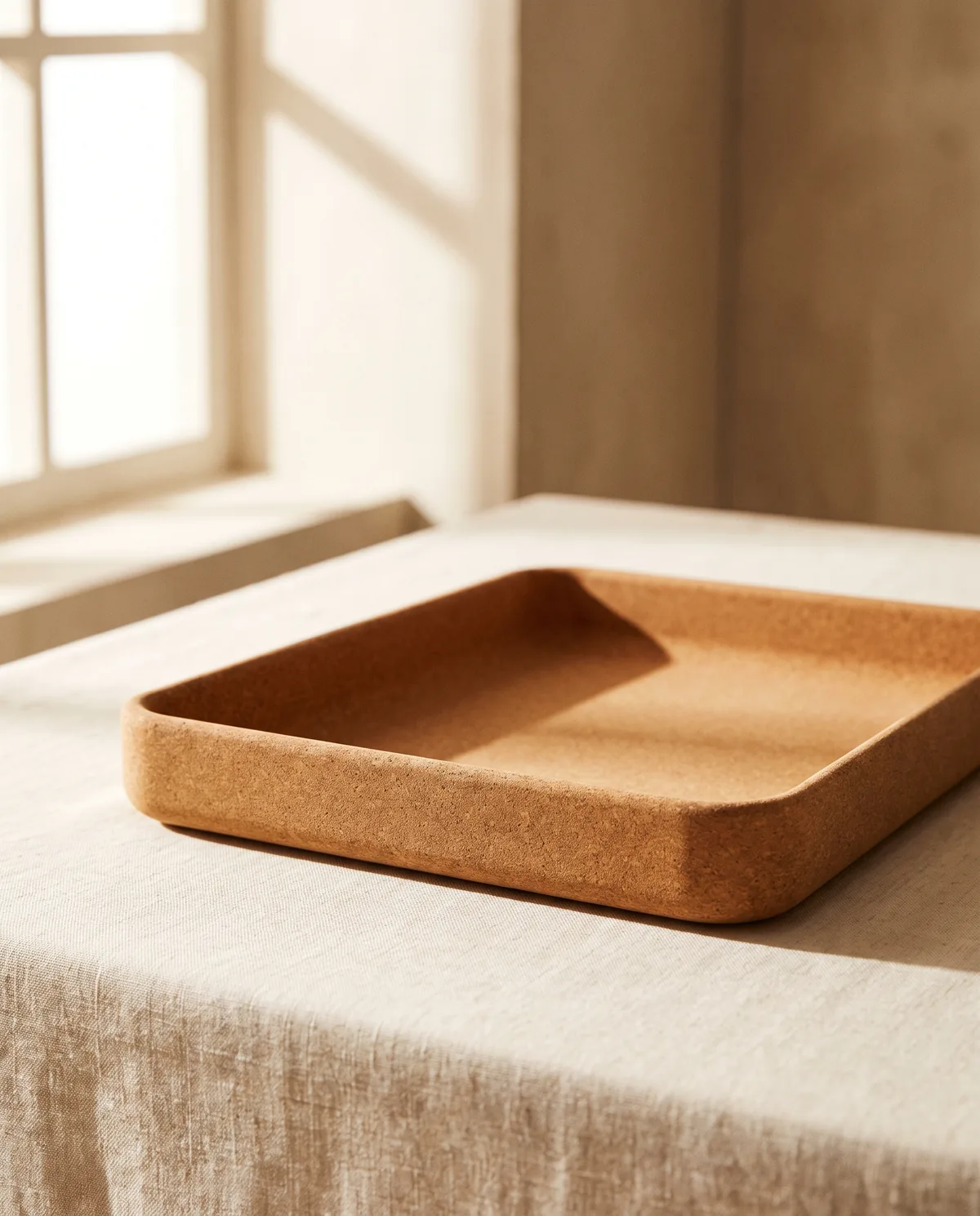
The object
At our facility the material becomes coasters, diaries, planters and awards — warm, light and unmistakably cork.
The things people actually ask
Does cork get slippery when wet? No, it grips harder. Is cork waterproof? No, and that matters. We have written the honest answers, including what cork is not good for, in the cork reference.
Why designers choose it
- Renewable: the bark is stripped by hand and grows back, and the tree is never cut.
- Naturally antimicrobial, water-resistant and feather-light.
- Vegan & cruelty-free — a premium alternative to leather.
- A grain no two pieces ever share — every item is one of a kind.
- Sourced from an FSC-certified supplier, biodegradable and recyclable.
- Warm to the touch and hard-wearing.